I'm The Fixer
Enterprise AI executive with 15+ years owning transformation, M&A integration, and AI operations at scale across healthcare's most complex organizations. Denver-based, available for regular travel. Remote-first, not remote-only.
In 2026, 70% of enterprise AI investments stall. Companies bought tools. They need operators. I build the operating model, deploy the agentic systems, and operate them until they produce results.
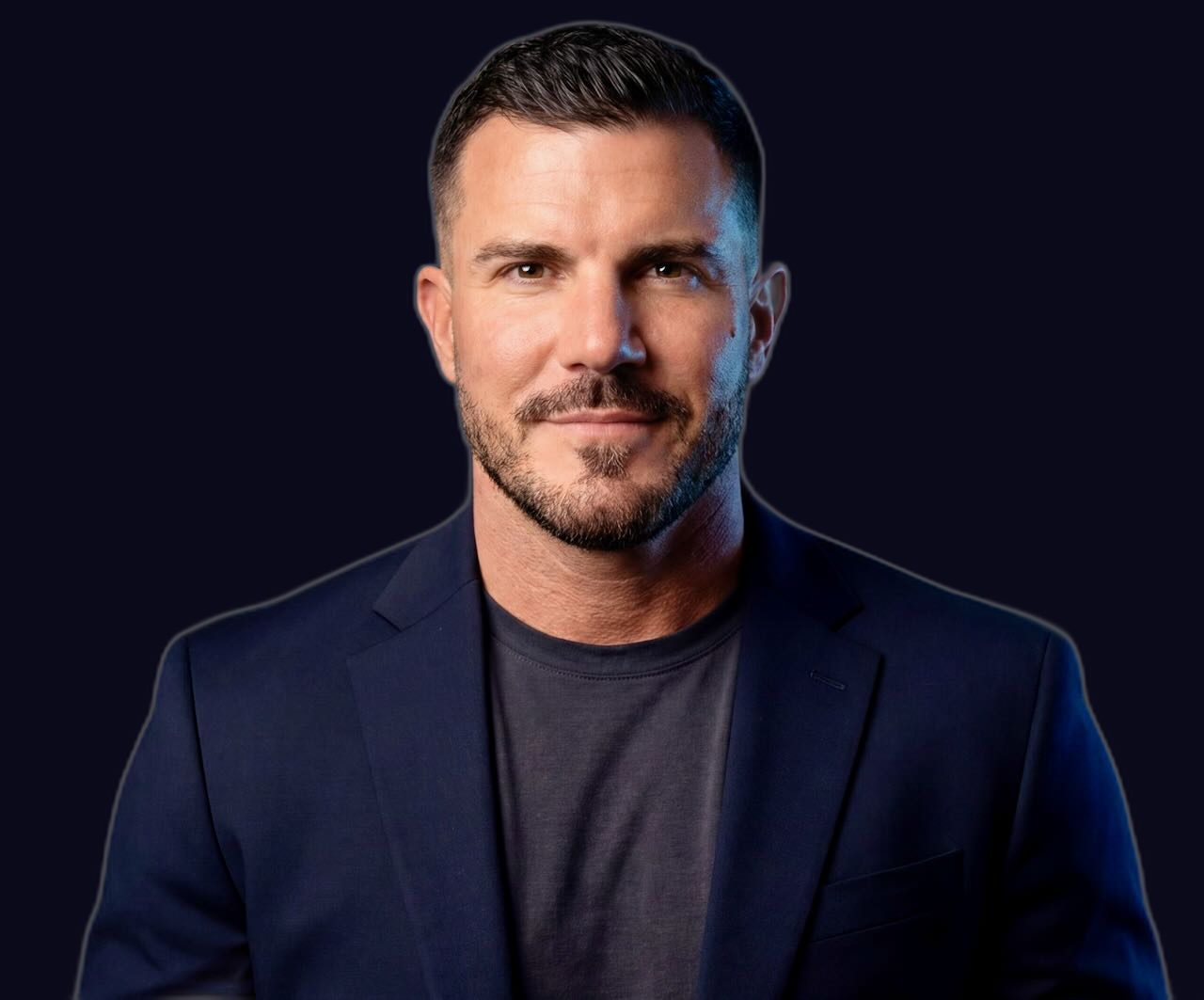
What Drives Me
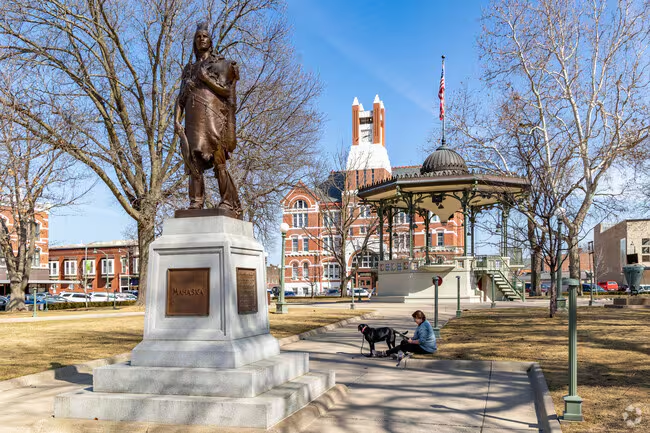
I grew up in Oskaloosa, Iowa. Population 11,000. My dad worked with his hands. My mom kept everything running. Nobody in my family went to college. I enlisted in the Army before I had a plan — Counterintelligence and Communications. That's where I learned that the person who stays calm when everything is broken is the person who fixes it.
Every job since has been the same pattern: walk into chaos, figure out what's actually wrong, and fix it. Caterpillar assembly lines. Hospital emergency departments. A $6B health system that needed to become a $32B one. My own company when I decided to bet on myself.
I don't do this because it looks good on a resume. I do it because fixing things is what I'm built for. And in 2026, there are a lot of things that need fixing in enterprise AI.
The Origin
Every Fixer has a story. This is mine.
This is where the discipline, the systems thinking, and the ability to walk into chaos and make it work — all started. Earned Primary Leadership Military Award. Completed Primary Leadership Development Course with Distinction.
Manufacturing & Logistics Engineer at Caterpillar. Continuous Improvement Lead at Hydratight/Actuant & Enerpac. Six Sigma Black Belt with Becton Dickinson. BS Industrial Engineering with Distinction from Iowa State. Lean. Six Sigma. Process. Every role was about finding what's broken and fixing it — on the factory floor before it was in the boardroom.
Started as the operations fixer at a $6B health system. Ended up transforming emergency care for 130,000 patients. Led investment and integration of EmOpti tools for Emergency Departments across five hospital systems — reducing ED wait times from 3 hours to 15 minutes. Recognized by George Washington University School of Medicine with Emergency Care Innovation of the Year Award.
Also sourced and adopted Babyscripts pediatric care management tool, reaching 200K+ mothers across 16 hospital systems. Secured $1M partnership with Noom for T2D/hypertension outcomes. Spearheaded $5M investment in Startup Health.
Built a new division from nothing. Presented to the Board. Created five revenue-generating workstreams — new business ventures, frontline challenges, venture investments, core enhancements, and medical device/IP — projected to bring in $60M+.
Established InvestMKE — $10M co-investment fund ($5M Aurora + $5M Northwestern Mutual). Helped establish $100M Wisconn Valley Venture Fund (Northwestern Mutual + Foxconn) — the largest cross-sector venture fund in the state. Founded MKE Tech Hub Coalition — nonprofit now thriving as regional institution. Launched crowdsourcing platform adopted by 21 companies generating $750K annually.
Nominated by CEO, Chief Strategy Officer, and Chief Administration Officer for Milwaukee's 40 Under 40.
Hired to build the innovation engine a $6B health system didn't have — from zero to subsidiary, venture fund, and a strategic growth trajectory from $6B to $32B.
Drove the strategic case to triple Aurora Healthcare's revenue from $6B to $25B — a fundamental pivot from years of cost-cutting culture that faced significant board-level pushback. Partnered with CEO Nick Turkel and SVP Mike Lappin to build and present the growth thesis. This led directly to the merger with Advocate Health and subsequently Atrium Health, creating one of the top 10 largest health systems in the US at nearly $32B in combined revenue.
This was not a consensus decision. It required putting the growth strategy and careers on the line to do what was right for the organization and the community.
Launched 83 Tech Harbor, wholly owned for-profit subsidiary. Recruited and hired team of 30+ for subsidiary, engaged with 2,000+ internal team members to improve collaboration. Administered $10M operating and $17M capital budgets. Managed $4B+ M&A and strategic partnership pipeline.
My assistant Genabon was promoted from assistant to helping run businesses we were building out — that's the kind of team impact I create.
Recruited to turn a stalled healthcare startup into an enterprise sales machine during COVID-19. Grew sales pipeline with 35% CAGR target, added $1M in revenue in first year. Secured $10M Series A in Q3 to enable new inpatient telehealth launch with Advocate Health, HCA, and Jefferson Memorial. Built multi-sided telehealth platform targeting $2M ARR by 2022.
Leveraged existing relationship with EmOpti to expand teletriage function across 14 locations and streamline ED operations during COVID-19.
Brought in to build the strategy and intelligence function for a $6B+ healthcare enterprise through acquisition, integration, and AI transformation. Worked directly at C-suite level across AI strategy, cybersecurity strategy, business development, strategic planning, and GTM execution.
Partnered with executive leadership on Oracle Cerner 2030 vision — build to $20B by 2030. Launched $150M strategic services initiative (Cerner era, pre-acquisition). Drove $35M in operational expenditure reductions in first year post-acquisition.
Built competitive intelligence operating system from scratch — automated pipelines processing 150+ competitor signals daily, replacing outside consultants. Built FY25-27 strategic planning framework across business units.
Navigated 3 leadership changes in 3 years — plus 2 at Cerner pre-acquisition — ensuring team focus remained consistent to enable delivery of 9 key initiatives while building structures for internal scaling and pivots.
Designed AI adoption framework managing individual executive trust curves — starting at 50% automation with user-validated conclusions, progressing to AI-generated strategic recommendations, and ultimately predictive market intelligence.
Built the AI operating practice because 95% of enterprise AI pilots fail — not from bad technology, but from no operating model.
Designed and deployed Intelligence Operations (IntOps) — a systematic 5-layer framework for operating AI at enterprise scale. Built and operate MICI OS with 130+ AI agents in governed production environments — equivalent output of a 5-person team at ~$500K/yr in avoided headcount.
Engineer and architect by training — I designed the system architecture, wrote the code, and built each component. I understand what real AI orchestration looks like versus what's theater.
Built the meta-system that builds the systems — new AI operating environments deployed in 90 days with multiple concurrent development streams.
Deliver Fractional Chief AI Officer and AI Operating Partner — 100-day turnaround proven ($6B→$32B Aurora, $150M Cerner initiative) engagements for PE portfolio companies, professional services firms, healthcare organizations, and mid-market businesses.
The Pattern
7 industries. Every one, same story: walk into the mess, figure it out, make it work.
The System
MICI OS — Not a chatbot wrapper. A 130-agent operating system.
Not a manager overseeing a team — an engineer-operator who ships. Every component was designed, coded, and deployed by me. 130+ agents. 5-layer governance. Confidence-gated automation. Zero-to-operating deployed 3x in 90 days.
System Specification
if confidence_score >= 0.85:
proceed_auto() # High confidence — execute
elif confidence_score >= 0.70:
proceed_with_validation() # Medium — human validates
else:
escalate_to_operator() # Low — human decides
How I Evaluate Fit
My AI system doesn't guess. It gates every decision with confidence thresholds. Here's how it works when a company asks "Is Mike a fit?"
Strong
Moderate
Honest Gaps
Admitting gaps signals confidence. Every hiring manager values this over an inflated resume.
The First 100 Days
What I'd actually do — not what I'd say.
Based on what I've done three times before: at Aurora (built from zero to $60M+), at Oracle Cerner (delivered 9 initiatives through 3 CEO changes), and at RIG (built 130-agent OS in 90-day sprints).
Listen and Map
Audit current AI deployments. Map every agent, every pipeline, every stakeholder. Find the stalled investments — that's where the value is trapped. I don't arrive with answers — I arrive with a diagnostic framework and questions.
Quick Wins + Architecture
Ship the first value-delivering automation. Establish the governance framework (because ungoverned AI is a liability — I've seen it fail). Start building the IntOps operating model adapted to your org's maturity level.
Scale + Prove ROI
Deploy 3-5 production agents with measurable outcomes. Generate the first ROI proof points — $35M savings at Oracle, $60M+ revenue at Aurora, this won't be different. Brief the board with data, not promises.
Build the Machine
Hand off the operating model. Make the AI function self-sustaining. Your company doesn't need me forever — it needs me to build the thing that doesn't need me. That's The Fixer way.
Built For
This isn't for everyone. It's for specific problems at specific companies.
Ask About Mike
I trained an AI on everything about me. Ask it anything. It won't sugarcoat.
This AI has access to my full career, my values, my strengths, AND my gaps. If you ask whether I fit a role that doesn't match, it'll tell you honestly.
The Hiring Panel
6 hiring legends. MiroFish swarm intelligence. Would they hire Mike?
Fit Assessment
Paste a job description. Get an honest analysis.
Operating System
Values. Strengths. The code I run on.
Loyalty
Team-first. Defend people who can't defend themselves. If I'd played it safe, Aurora would still be $6B.
Impact
Do what's right for the company, not what's safe for your career. The $32B merger required putting careers on the line.
Autonomy
Own path, own terms. Build your own thing. I built from zero three times.
Dignity
Never make it personal. Don't punch down. Genabon got promoted — that's how teams should work.
Resilience
3 CEO changes. 9 initiatives. Still delivered. "Why do we fall? To pick ourselves back up again."
StrengthsFinder: Achiever · Futuristic · Restorative · Self-Assurance · Relator